30-Day Series
You Don't Have to Be "Techy" to Use AI — You Just Have to Be Curious

Let me ask you something.
Do you know how to use Google? Do you send emails, write texts, maybe post something on social media every now and then?
Then you already have everything it takes to use AI.
I know that might be hard to believe. Because somewhere along the way, most of us got the message that AI was for a certain kind of person — the programmer, the tech startup guy, the 25-year-old with a computer science degree and three monitors on his desk.
That person is not you. And honestly? That’s not who AI is actually for anymore.
What AI Actually Is (In Plain English)
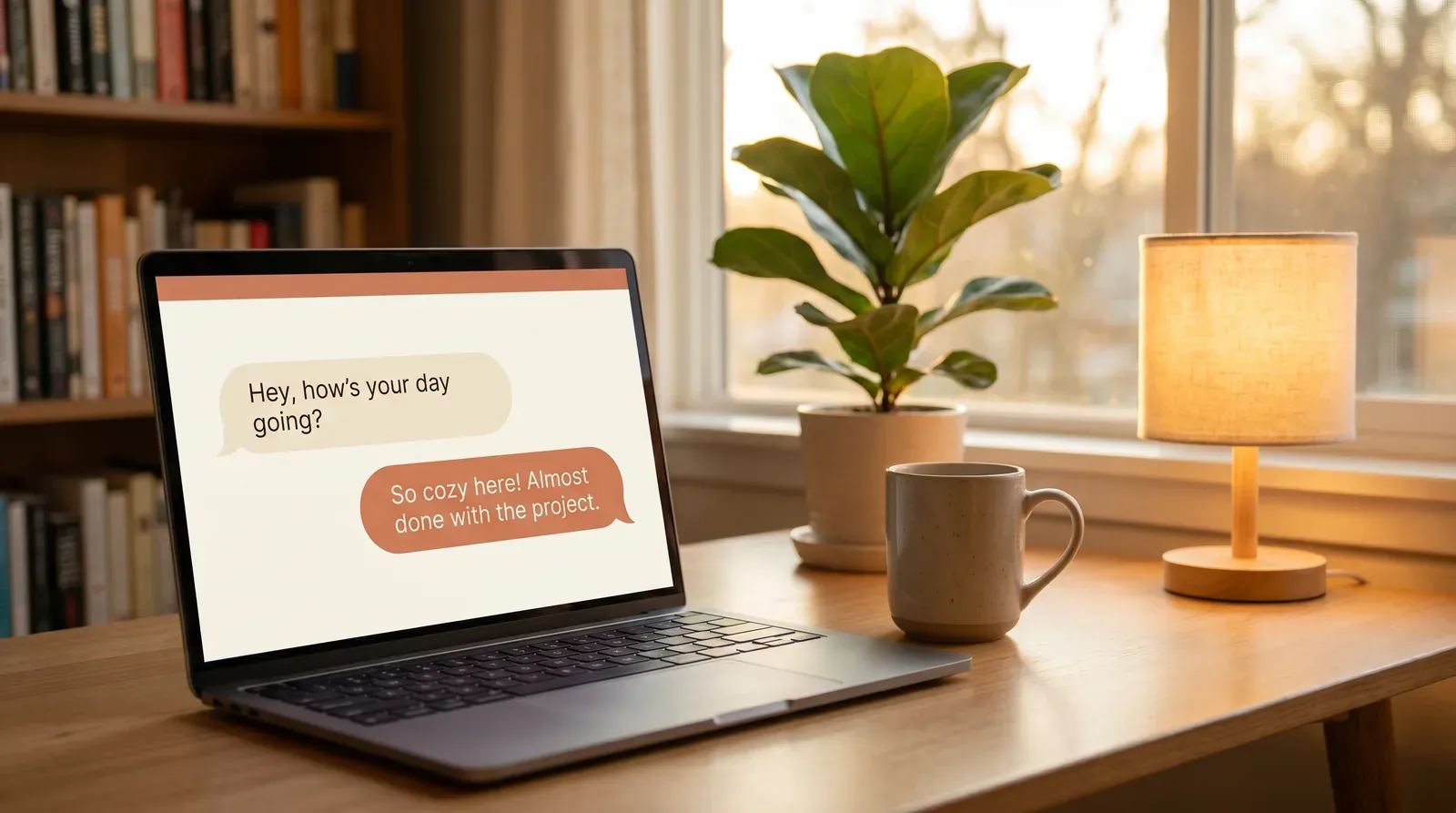
AI tools like ChatGPT and Claude are not complicated software you have to configure or code. They’re conversation tools. You type something — a question, a request, an idea — and they respond. That’s it.
If you want the difference in plain English, I compared ChatGPT and Claude.
Think of it less like learning new software and more like texting a very well-read assistant who never sleeps, never judges you, and never makes you feel silly for asking a basic question.
You don’t need to know how it works under the hood any more than you need to understand how your car engine works to drive to the grocery store.
Why Women Over 55 Are Actually Perfectly Positioned for This
Here’s what nobody talks about: the skills that make AI genuinely useful are the skills you’ve already spent decades building.
You know how to communicate clearly. You know what you need. You know your business, your clients, and your voice better than any algorithm ever will.
AI doesn’t replace any of that. It just handles the time-consuming, repetitive, stare-at-a-blank-page parts so you can focus on the work only you can do.
The women I see struggling with AI aren’t struggling because they’re not techy enough. They’re struggling because they haven’t been shown that it’s actually simple — and that it was built for them too.
If you have been cautious about all of this, that hesitation is often a strength.
The Only Thing You Actually Need to Get Started
Curiosity.
Not a course. Not a certification. Not a new laptop or a subscription to seventeen tools.
Just the willingness to open a browser tab, type a question, and see what happens.
Here’s a simple place to start: go to ChatGPT or Claude and type this:
“I run a solo business as a [what you do]. What are three ways AI could help me save time this week?”
That’s it. Read what comes back. Ask a follow-up. See where it goes. You’re not committing to anything. You’re just having a conversation.
What Happens When You Give Yourself Permission to Just Try
Something shifts when you stop waiting until you feel “ready” and just start. The overwhelm gets smaller. The curiosity gets bigger. And suddenly you’re using AI to draft your newsletter, brainstorm your next offer, or finally write that About page you’ve been putting off for two years.
It doesn’t happen because you became a tech person. It happens because you stayed exactly who you are — and gave yourself one new tool to work with.
You’ve figured out harder things than this. A lot harder.
Questions I hear most often
Do I need to be tech-savvy to use AI tools?
No. If you can send an email or use Google, you can use AI. These tools are designed to be conversational — you type, they respond. No coding, no configuration required.
What’s the best AI tool for a complete beginner?
ChatGPT and Claude are both excellent starting points. Both are free to try, both work like a conversation, and both are designed to be helpful without requiring any technical knowledge.
How long does it take to learn AI?
You can have a useful AI conversation in the next ten minutes. Learning to use it well is an ongoing process — but the basics are genuinely accessible from day one.
The Smart Stack
Want more beginner-friendly AI guides built for women solopreneurs?
Head over to the Resource Center — that’s exactly what it’s there for. Or join The Smart Stack for weekly clarity in your inbox.
Keep reading
More on 30-day series.